The Final Works of
Ozu and Mizoguchi
Written by Carter Davis
After sitting with the final works of the great Japanese directors Kenji Mizoguchi and Yasujirō Ozu I realized the one thing that stood out to me the most - something I didn’t see mentioned in many other analyses - which is the fact that both auteurs ended their careers with films about women who were basically stuck. Stuck by money, by family, by a society that was changing in ways that somehow still managed to leave them behind.
Mizoguchi made Street of Shame in 1956 and died that same year. Ozu made An Autumn Afternoon in 1962, and passed away the year after. Neither of them knew it was their last film. And yet both of them landed on the same subject.
I find this genuinely hard to shake, especially considering their proximity in time and location.
As I previously discussed, both films center the tradition of Gendai-geki that focuses on contemporary life drama; post-war Japan, domestic tensions, and everyday discord. Ozu spent his whole career in these waters, while Mizoguchi merely dipped his toes in every so often.
Although, for the purpose of this video, I want to discuss how the genre matters less than what they each did inside of it. When watching these films back-to-back, you start picking up on the similar questions the directors are asking. And, in turn, the very different answers that are being received, which I feel has a lot to do with what each of these directors set out to accomplish when they made their respective films.
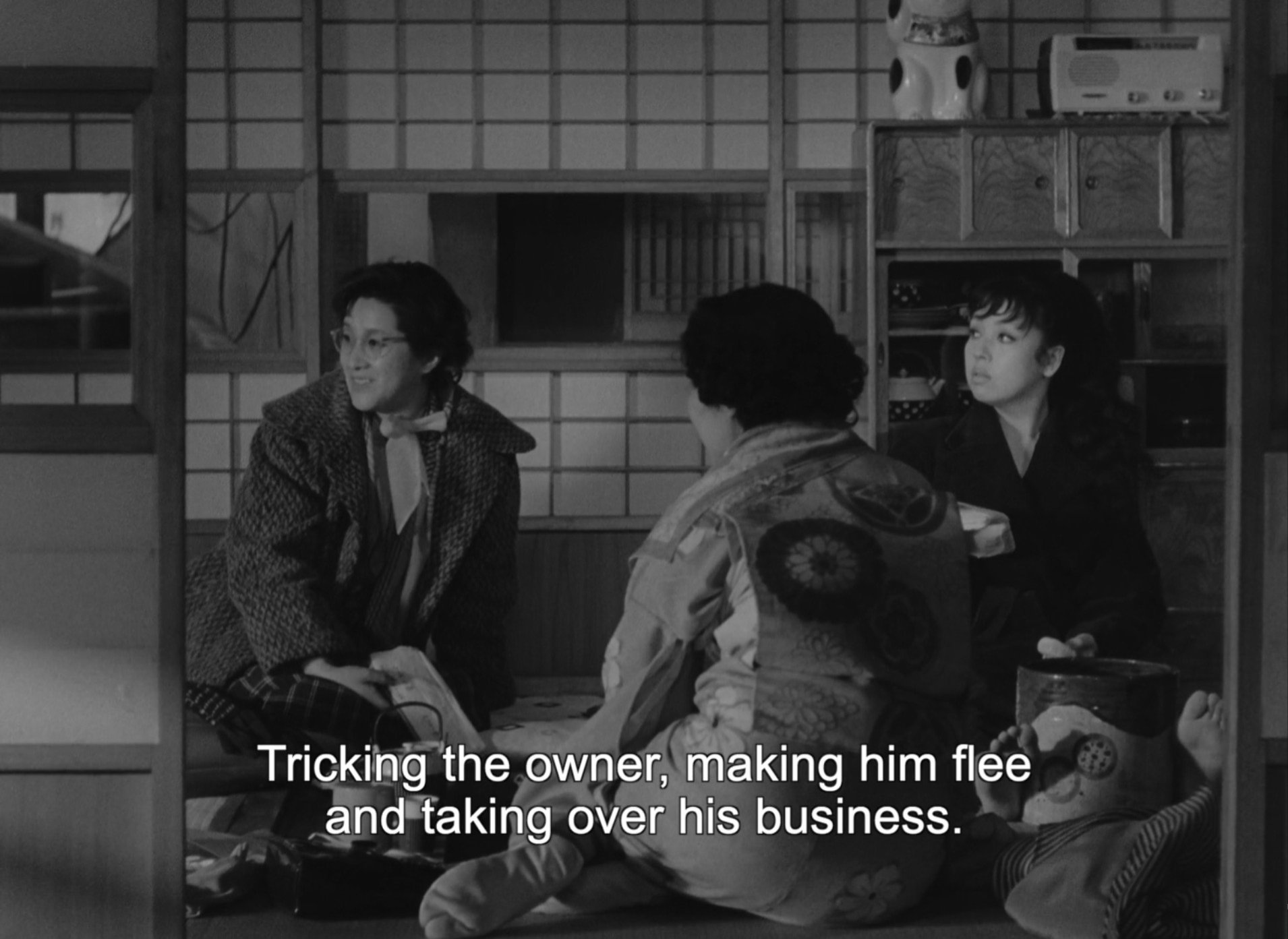
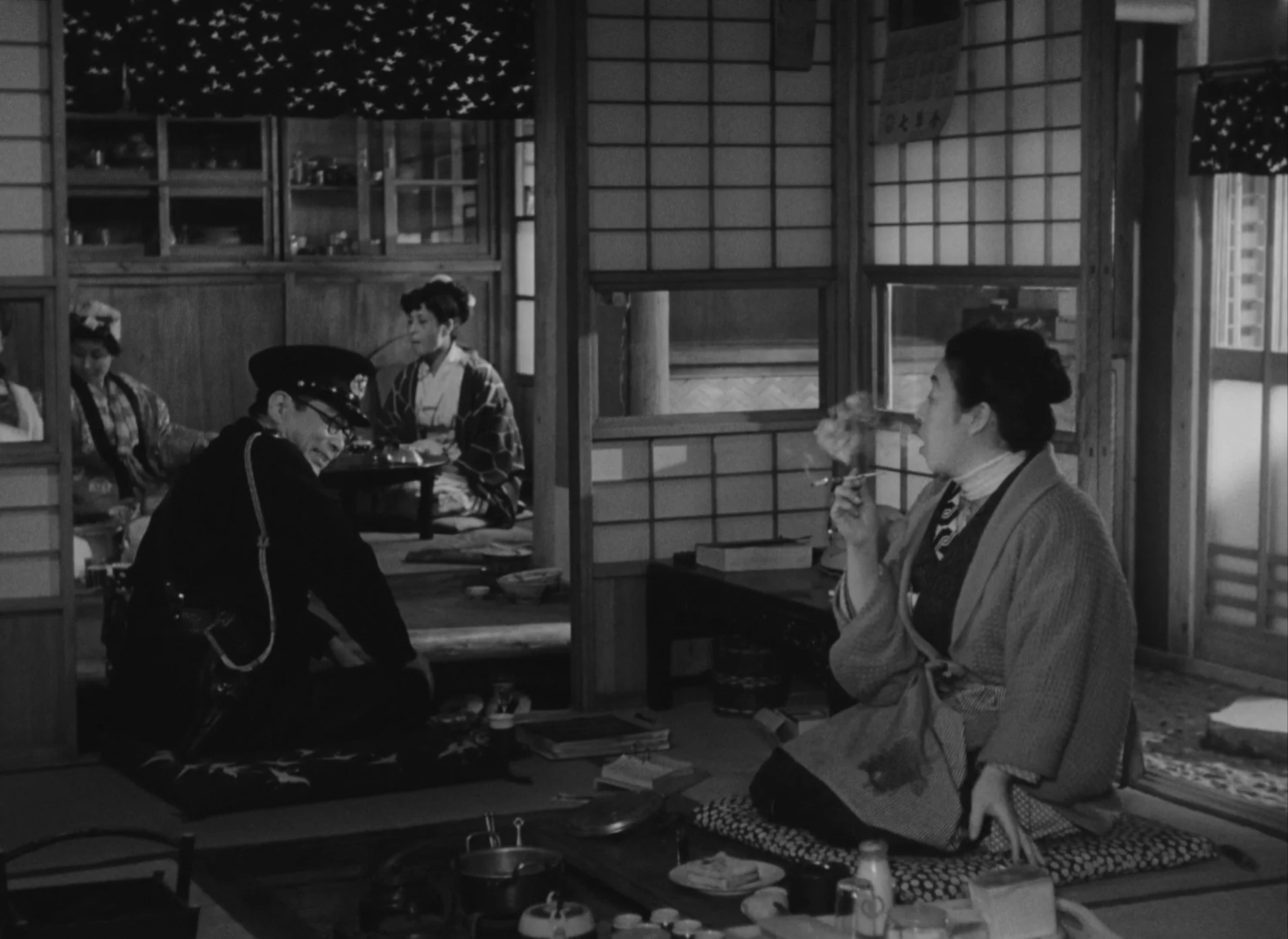
Street of Shame is set in a brothel, Yuki-no-Hana, while an Anti-Prostitution Bill is working its way through the Japanese parliament. Five women work there: Yasumi, Micky, Hanae, Yumeko, and Otane. Each of them ended up there differently; a husband got sick, a debt got out of hand, a son who, when asked, says he doesn't know her. Mizoguchi refuses to rank these women, there’s no central protagonist being followed while the others fade into the background. Since he gives all five of them equal weight, the viewer ends up thinking about something bigger than their individual circumstances. The question stops being "how did she end up here" and becomes "why is this a place women end up."
The bill passes at the end of the film, a new young woman walks into the street, and a client comes toward her. . . that's it. The law changed and nothing else did along with it; concluding without resolution or catharsis.
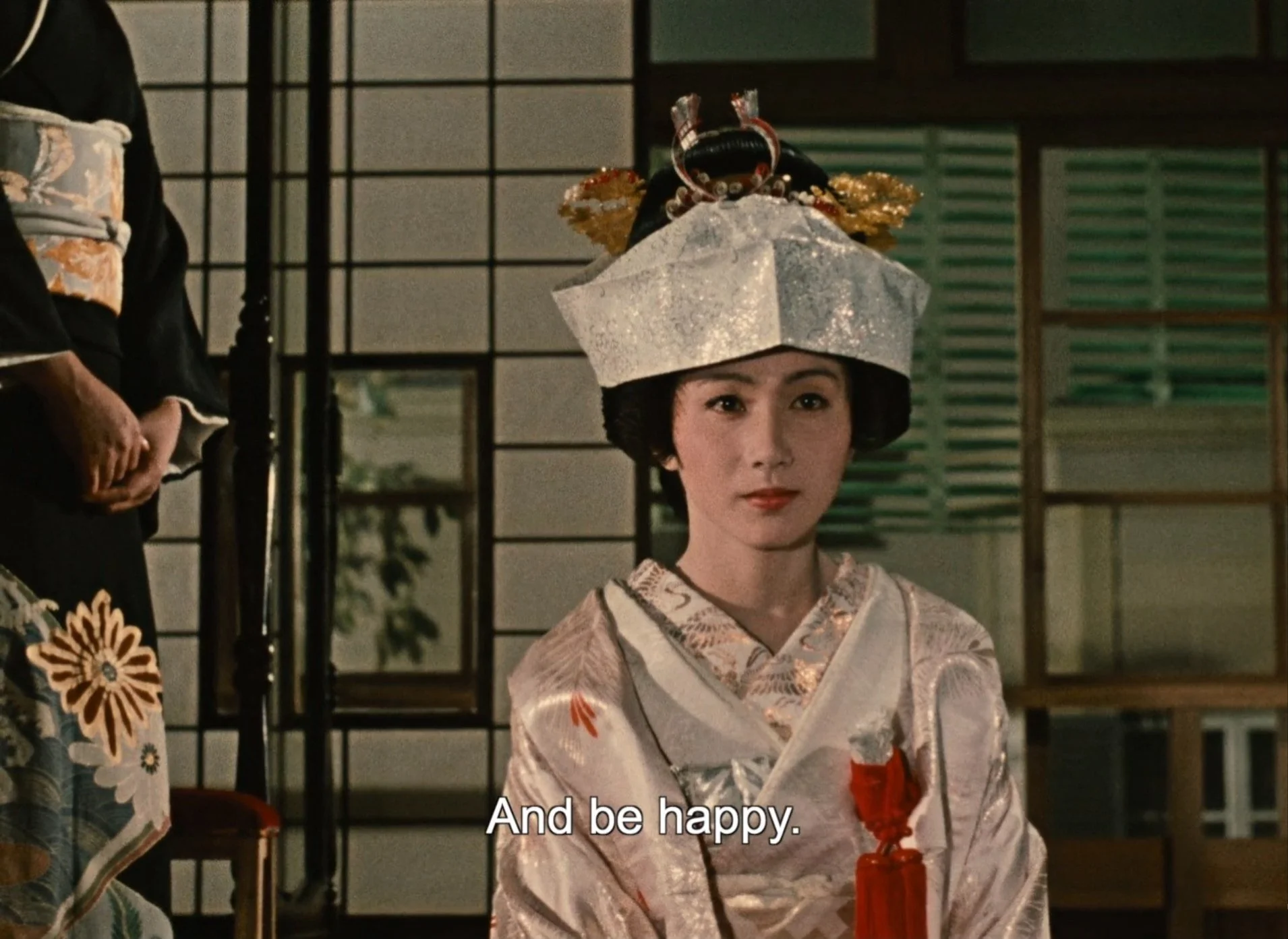
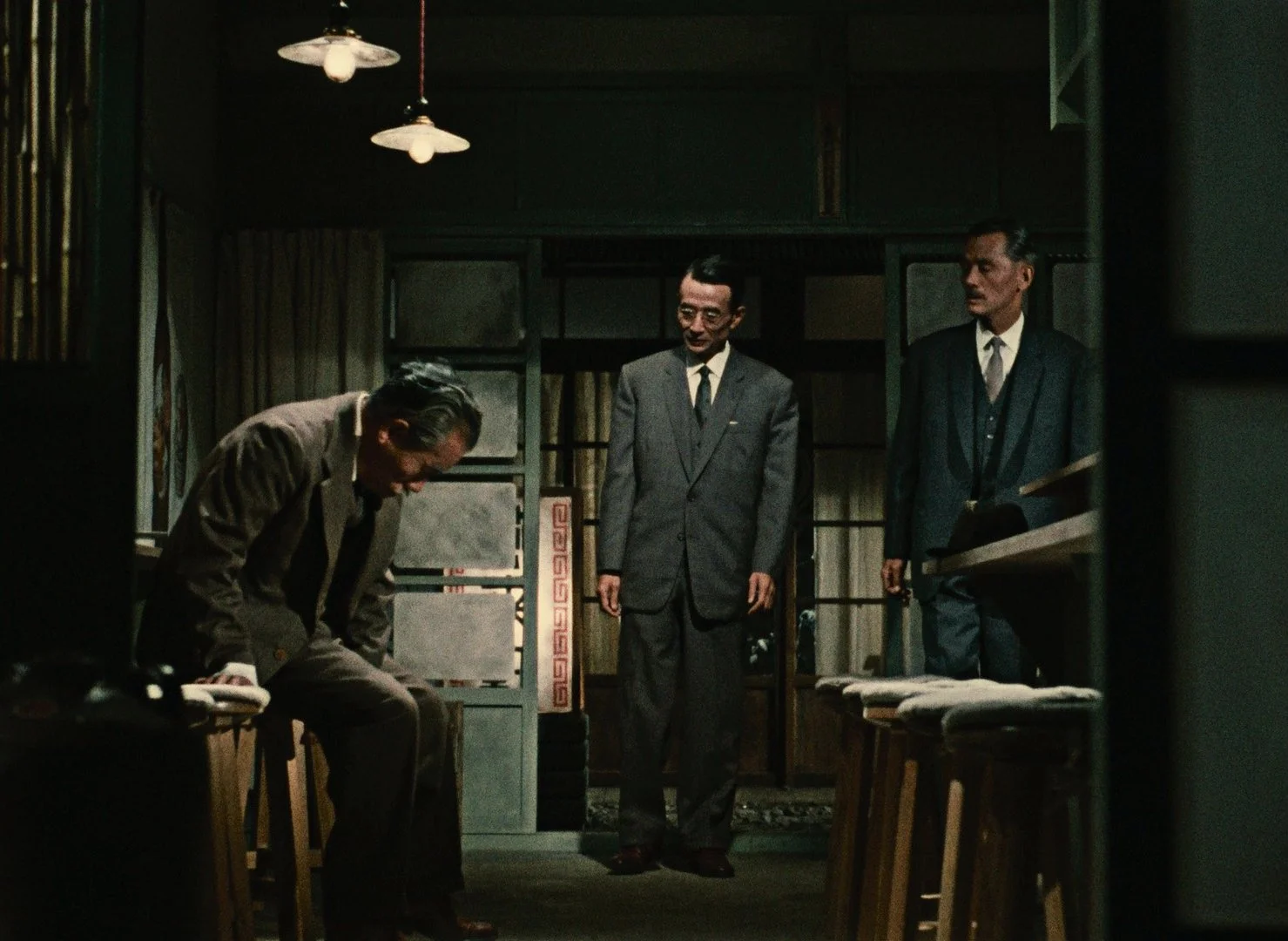
On the other hand, Ozu’s final piece feels like a completely different film, as An Autumn Afternoon is much less assertive, and - admittedly - puts these feminist themes more in the backseat. Chishu Ryu’s Hirayama is a widowed salaryman slowly working up to arranging his daughter Michiko’s marriage. He has meals with old friends, drinks a ton of sake, and lives inside a comfortable routine. There's another character, a former teacher everyone calls "the Gourd," who is sort of a wreck - he’s an alcoholic whose daughter never married because she stayed home to take care of him. All to say, Ozu doesn’t necessarily treat the women as admirable, exactly, but moreso something holding down the men in the story. To Hirayama, the Gourd and his daughter reads as a warning: this is what happens if Michiko stays.
With Michiko herself barely appearing in a story circulating around her undetermined future, the question of who she’ll marry, whether she wants to, what she thinks about any of it… is mostly handled by the men around her in conversations she isn’t apart of.
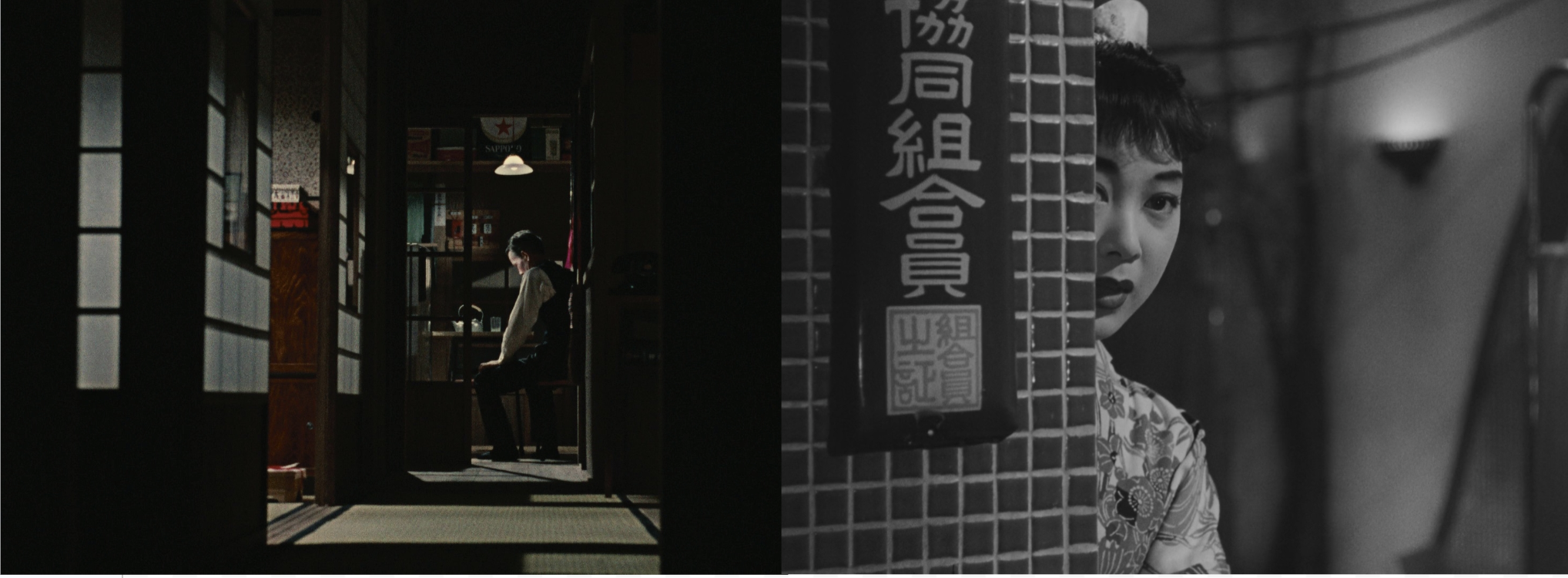
Yes, the films portray women differently. It’s fascinating to examine, but what is all the more interesting is that these films are pristine representations of what the dual directors spent decades working with. Street of Shame ends on a young woman walking into a street, about to be swallowed by the world. Inversely, An Autumn Afternoon concludes with a man alone in a dark apartment after he sent his daughter out into this world. Different questions, different answers!
Endings play back-to-back.
Mizoguchi seemed to think cinema had an obligation to the people it was about. Ozu seemed to think it had an obligation to be honest about what he saw. Street of Shame and An Autumn Afternoon are maybe the clearest proof of the fact that these aren’t the same thing, yet triumphant on their own rights.